GLOBAL SUCCESS
is the result of a clear concept
ADDED VALUE
is the result of our reliability
OUTSTANDING QUALITY
is the result of close cooperation
TRACEABILITY
is the result of full transparency
MUTUAL TRUST
is the result of strong business relationships
COMPREHENSIVE KNOWLEDGE
is the result of continuous research

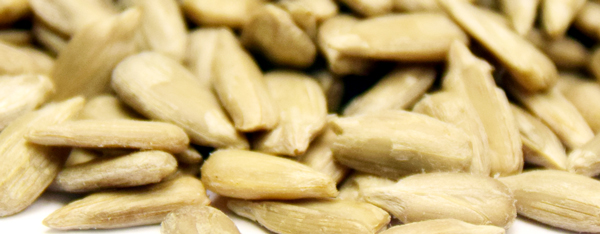
Market Information Sunflower Kernels

Increase in Russia and the Ukraine – Reduction in Bulgaria – 13.12.2016

Sunflower Kernels

Sunflower Kernels – Russia:

Up to now the crop volume of sunflower kernels in Russia was estimated to amount to about. 10 million MT. It is assumed that the reasons for the now discussed rise of the crop estimations may be due to the expanding acreage up to 7.000.000 hectare in combination with the high yield per hectare because of good weather conditions. It is expected to exceed the crop record of more than 10,50 million MT out of the crop year 2013.

On the part of the farmers, priority is more given to the economic efficiency which depends mainly on the development of the prices on the raw material markets. But this cannot be clearly answered at present.


Sunflower Kernels – Ukraine:

It is assumed that the estimated crop value in Ukraine, compared to present forecasts, will significantly rise. Due to favorable weather conditions in 2016, nearly 6 million hectare of cropland could gain average yields of about 2,27 MT per hectare. According to market participants the crop volume is estimated to amount to a record level of more than 13,30 million MT. This raise in crop volume is favorable to satisfy the growing demand of the Ukrainian sunflower oil crushing industry.


Sunflower Kernels – Bulgaria:

The official crop report issued by the Ministry of Agriculture of Bulgaria shows a further reduction of crop land of about 20.000 hectares. Until October it was assumed that this years yield of sunflower kernels will be around 780.000 hectares but according to more recent statistics only 760.000 hectares could have been harvested. This situation leads to a lower crop amount which is only – despite considerable yields of about 2,24 MT per hectare – estimated to about 1,70 million MT.  Up to now prices on the raw material markets remained stable.


Sunflower Kernels – USA:

The American aim for greenhouse gas reduction has recently been announced in the Government’s strategic paper. The use of renewable raw materials in the fuel sector is to be further expanded. For this purpose, a new US Standard for fuels is to be set up from 2017 onwards. This consists of a defined energy mix including organic ethanol products, vegetable oils and fossil fuels. The usage of soya oil alone should now be increased by more than 6% by this new decision.
Significant and clear reactions to the stock exchange listings for oilseeds such as soya could be observed. Demand and price increases for soya will inevitably lead to a rise of interest for alternatives such as sunflower oil, which in turn can lead to an impact on the sunflower kernels raw material market.


Tampico Trading – More than 30 Years of Success

“We only deal in a few well selected foodstuffs – but for these we are experts!”

EMail: c.dingfelder@tampico.de | Tel.: +49 911 91 96 69 27
 

Market Information Linseed

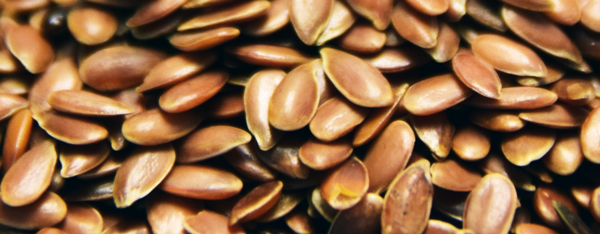
Focused on: Pesticide residues in Russian linseed – 07.12.2016

Linseed

Linseed – Russia:

During the last 5 years the Russian acreage has always been on a level of considerably more than 400,000 hectare. The annual amounts harvested have been subject to fluctuations but they were always between 320,000 and 400,000 MT. Therefore, Russia is still the biggest Eastern European producer and the most important raw material supplier for the feed and food industry in Europe.

In view of the crop yield of 2016 until now we assumed a middle-sized crop yield volume of approx. 350,000 MT. Due to the trouble-free harvest the first shipments to Europe arrived already mid September. Market participants informed us that since September 2016 in total 3 shipments with Russian linseed destined for the European market have not been forwarded from the origin. Meanwhile this is more than 10 % of the current crop. Until now there have not been any replacements yet. According to market participants it is assumed that they may have any problems with pesticides and give further cancellations of shipments serious consideration. A more decisive reason for this is definitely the reduction of the limits for pesticides residues like for HALOXYFOB (MRL reduced from 0,10 mg/kg to now 0,01 mg/kg) according to EU regulation no.2015/2075.

We have been informed that, nevertheless, linseed which is not marketable finds its way to Europe; among others via re-cleaning factories in other Eastern European countries which gained more and more market shares because of the previous development of the market and the low price level. According to market participants it is a realistic scenario that authorities will implement these changes in their official monitoring system.


Linseed – Kazakhstan:

The cultivation of linseed in Kazakhstan has been steadily expanded over the recent years. So far, it is again expected that more than 400,000 hectares will be produced in 2016. However, because of the poorer climatic conditions and the shorter growth period, the yields per hectare are also significantly lower than e.g. in Russia. Despite the 15-20 % harvest loss which is almost normal, a crop volume of approx. 300,000 MT is realistic in 2016. Harvesting has not been completed yet, about 20 % of the harvest is still afield, but the farmers are confident to complete harvesting before frost occurs and the fields are drivable.

Kazakhstan is the second most important source of the European demand of linseed. Due to bilateral agreements with China since the beginning of 2016, Kazakhstan has got direct access to one of the world’s largest buyer. At the moment, however, there are no offers from Kazakhstan available, and until now there are also no market-releasing deliveries coming in sight. Due to the current situation in Russia, market participants expect Kazakh suppliers to participate in the rising price level.


Tampico Trading – More than 30 Years of Success

“We only deal in a few well selected foodstuffs – but for these we are experts!”

EMail: c.dingfelder@tampico.de| Tel.: +49 911 91 96 69 27

Tahini, Halva, Sesame Oil, Snack Bits

The large diversity of sesame products – 16.11.2016

Tahini

TahiniTahini is a natural sesame seed cream, FREE of chemical additives, WITHOUT the addition of preservatives, gluten-free, NO bleachers, pasteurized (no pathogenic microorganisms). The timeless trend product Tahini combines all the advantages of sesame and is thus an essential component not only for the vegetarian and vegan diet.
On one hand Tahini tastes good on bread in its natural state or refined with some honey. On the other hand it goes well with muesli or yoghurt. It is a very important main ingredient of hummus and can also be used to bind sauces and Dips.
Tahini is 100% natural sesame and is ideal for a health-conscious and Mediterranean diet. To produce Tahini, the sesame seed is ground exclusively in traditional stone mills. This traditional and gentle manufacturing process helps to maintain the sesame seed’s entire flavour and typical taste. Tahini has a high content of simple and polyunsaturated fatty acids; it is rich in vitamin E, B, calcium, natural minerals, and trace elements. It contains no cholesterol – is gluten free.


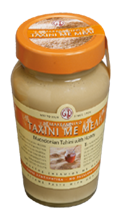
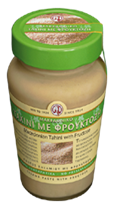
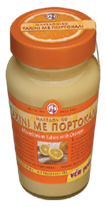
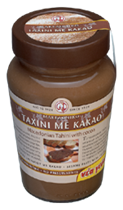
Tahini, Spread

  • Sesame paste with cocoa, excellent on bread or toast for the perfect breakfast or crepes as well as croissants.
  • Sesame paste with prebiotic fibre, unique taste through a natural combination
  • Sesame paste with Fructose
  • Sesame paste with honey, tastes both in the morning and evening simply unique
  • Sesame paste with orange flavour, rich in vitamin C, E, and calcium, refreshing taste, contains antioxidants

Tahini Spread Tahini Spread Tahini SpreadTahini Spread


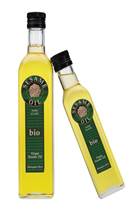
Virgin Sesame Oil

Our sesame oil is obtained from organic sesame seed by a natural process with cold pressing, without additional artificial auxiliaries or additives.
The oil stands out due to the golden yellow colour, the sweet taste, as well as the slightly roasty and nutty aroma.
Mainly, it consists of simple and polyunsaturated fatty acids, which by nature do not contain any cholesterol or trans-unsaturated fatty acids.

It is also rich in vitamins, in particular vitamin E. Suitable for frying, high smokepoint.
Sesame oil is known since the ancient world and, contrary to the Asian sesame oil, it is suitable not only for flavouring but also for frying, cooking and baking

Sesame Oil Organic  Sesame OilSesame Oil in a Canister


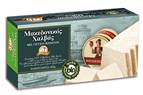
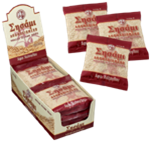
Halwa

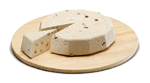
Mixture of tahini and glucose, gluten free, FREE of preservatives or additives, the main ingredient of halva is tahini and a mixture of natural sweeteners. Halwa is a fat-containing, fibrous mass, made of sesame seed, with fine caramel fibres. Not crumbling.
Halwa is a natural traditional confectionery, which is an essential part of the Mediterranean diet. It is very popular in the Mediterranean and the Middle East but over the last few years Northern Europe has also shown an increasing demand. Halwa has been produced by our supplier since 1924.

The main ingredient of the halva is tahini and a mixture of natural sweeteners.

Halva PackageHalva on plate


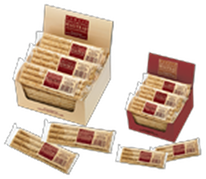
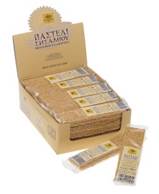
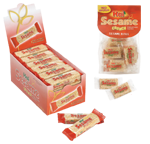
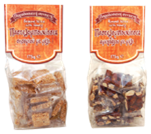
Sesame – Snack Bits

67% of sesame meets natural honey. Made of  precious natural sesame seeds without additives or bleachers.
Bars (with glucose syrup and honey) are also available with peanuts, walnuts, almonds, hazelnuts or pistachios *
* different qualities / sizes (recipe according to customer’s requirements is possible).

Sesame Bars   Sesame BarsLittle Sesame BarsSnack Bits


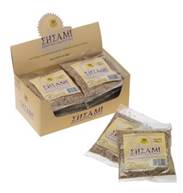
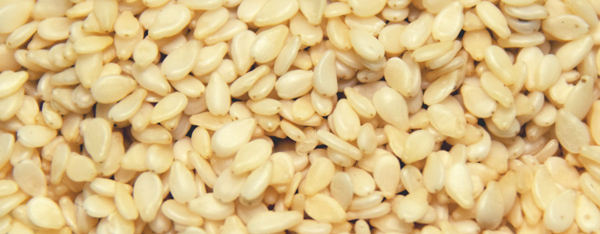
Sesame -Natural

By selecting high-quality raw material and a modern manufacturing process, it is hulled completely without chemicals, using fresh potable water out of the municipal pipeline network.
Hulled and natural sesame seed thus maintains its characteristic nutty flavour with a delicate hint of bitterness. The additional dietary fibre makes natural sesame seed very popular which is cleaned by washing so that sticky earthy components and other adherences are removed.

Permanent quality controls, internally and externally, ensure a safe food that meets the highest requirements.

The pasteurization of the finished product gives the highest level of safety possible in view of microbiological contamination, e.g. Salmonellae.
A combination of heat and modified atmosphere by removing oxygen (ECO2 treatment) ensures that the end product is protected in an environmental friendly way against possible insect infestation at all developmental stages. Until shipment the manufactured goods are stored in cold rooms.

Natural Sesame Natural Sesame


Tampico Trading – More than 30 years of success

„We only deal with well selected groceries – but for these we are experts!”

Please contact us:
Mail: d.pelikan@tampico.de | Tel.: +49 911 91 96 69 29
Mail: l.laue@tampico.de| Tel.: +49 911 91 96 69 30


Market Report – Update Sesame Seed

Total crop volume on last year’s level – 19.10.2016

hulled sesame seeds

The prices for sesame seed have been increased by ca. 30 % since the all-time low at the beginning of this year. One particular reason is the considerably lower crop volume in India with 250,000 mt. which is ca. 40 % below last year’s price level.

On the contrary in 2016 the African continent shows the largest all-time crop volume with approx. 1,5 mio mt.

The total market is mainly ruled by the consumption of China. The Chinese annual requirement amounts to ca. 1 mio. Mt whereas ca. 150,000 mt come out of the own production. Thus, the monthly consumption amounts to ca. 85,000 mt. At present ca. 180,000 mt of unsold sesame seed are lying in Chinese docks. We anticipate these quantities to be consumed by the end of this year and expect an increasing demand as from November.

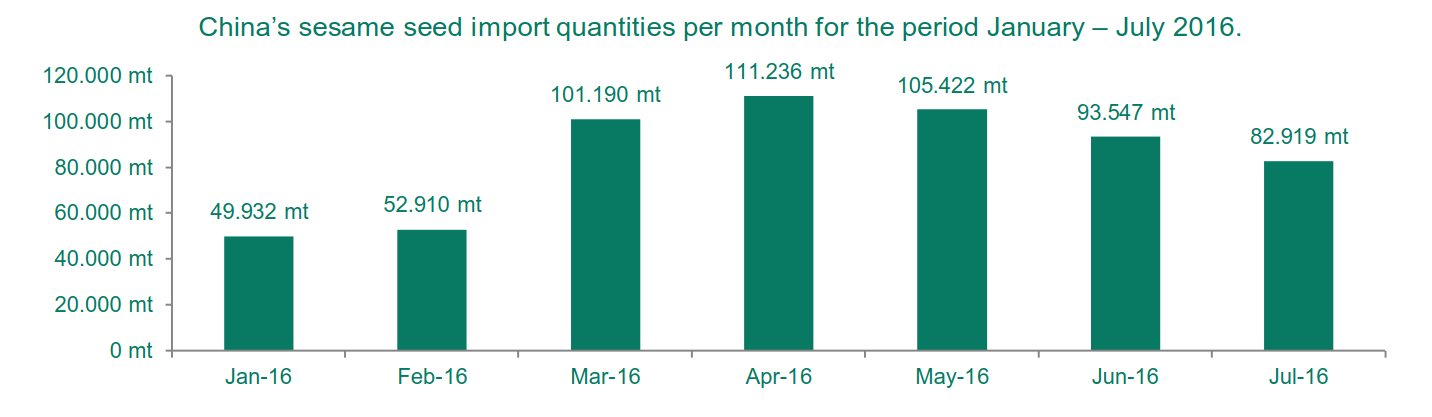
China's sesame seed import quantities

Until July 2016 already ca. 600,000 mt sesame seed were imported. After Chinese New Year in February the import volume raised considerably.

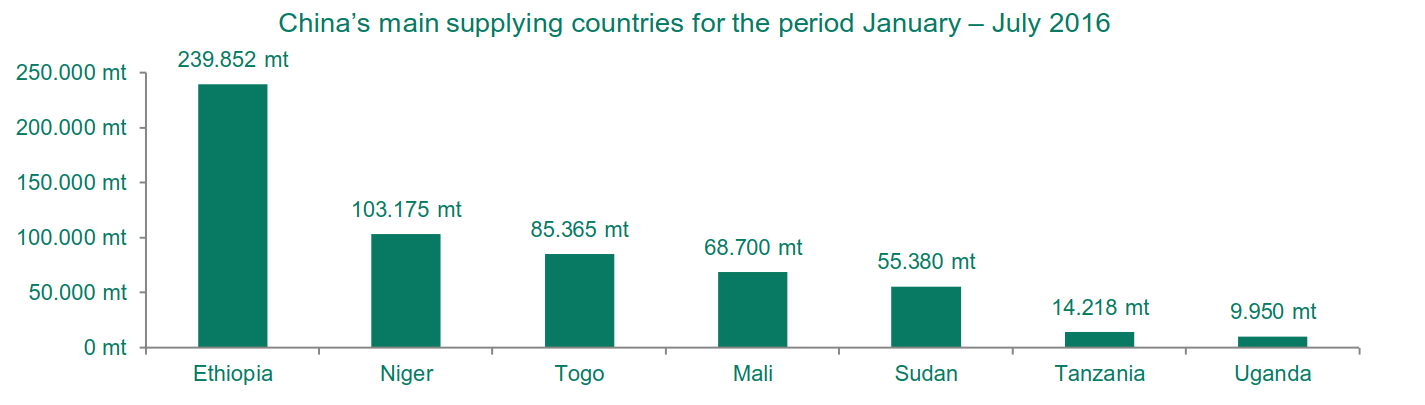
China's main supplying countries

India is merely irrelevant as a supplying country for China.
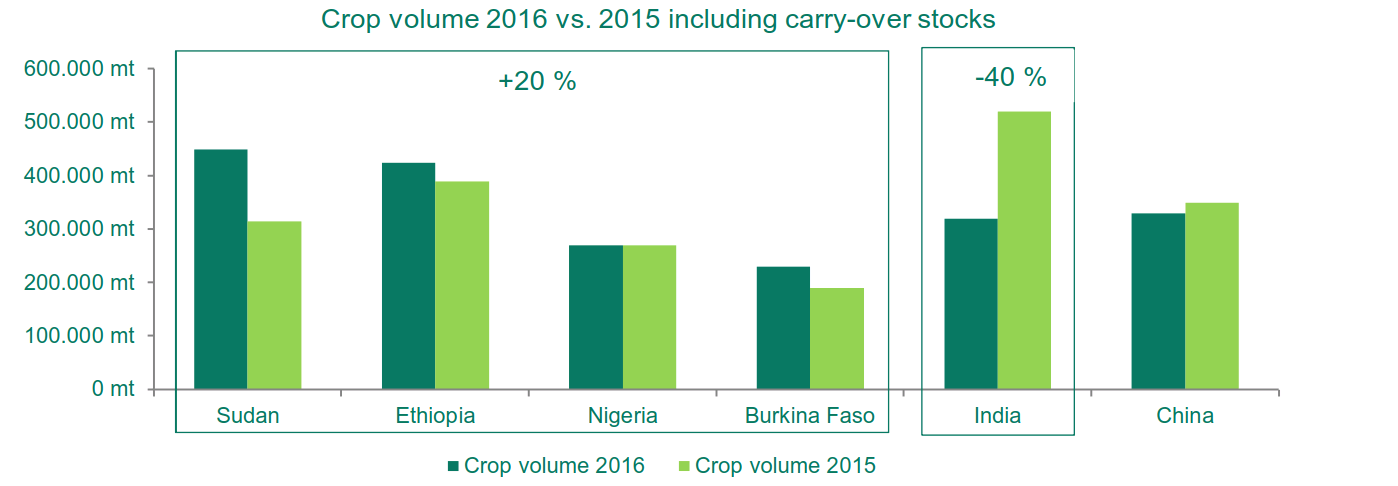
Contrary to India the following African countries of origin such as Nigeria, Burkina Faso, Ethiopia and Sudan – which are important for our markets – have an increase in crop volume of ca. +20% in total versus prior year. By this  the lower crop volume in India of ca. – 40 % is mainly compensated

crop volume 2016 vs. 2015
We expect increased acquisitions in Africa, in particular from China. Also India will buy a part of the raw material in Africa in order to cover their own demands and their export obligations.

Due to similar total crop volumes (Africa + India + China) in the year 2015 (ca. 2,035,000 mt) and 2016 (ca. 2,025,00 mt) we do not expect any substantial price increases. On contrary we anticipate prices to decline by the end of the year. We recommend buying in accordance with the market.


Tampico Trading – More than 30 years of success

„We only deal with well selected groceries – but for these we are experts!”

Please contact us:
Mail: d.pelikan@tampico.de | Tel.: +49 911 91 96 69 29
Mail: s.ludwig@tampico.de | Tel.: +49 911 91 96 69 19

Market Report – Linseed

Market Report Linseed – Crop 2016 – 13.10.2016

Linseed

Linseed – Russia:

The Russian crop is already harvested and has almost been contracted. In the middle of September a lot of 15,000 mt had to be cancelled as there hasn’t be any marketability of these goods in the EU – the reason for this hasn’t been officially published yet. At present there are only raw material quotations from Russia which are too small for shipping and the appropriate sampling procedures. It is expected that these volumes will find its buyers in Eastern Europe.


Linseed – Kazakhstan:

Due to the favourable weather conditions the crop harvest is making good progress. Until now approx. 70 to 80 % of the acreage has been harvested. Market observers are expecting a crop volume of up to 350,000 mt. According to official estimations much higher quantities (approx. 600,00 mt) are announced.
Due to governmental subsidies the acreage for linseed has been enormously extended, even on uncultivated wasteland. It is expected that in fact only 60 % of the total acreage will be harvested.
Kazakhstan will probably enter the linseed market in about 4 – 5 weeks. Shipments will depend on the availability of Russian rail transports to the Russian sea ports. Under favourable conditions, first shippments may be expected starting mid/end of November. Exports to China (meanwhile the biggest purchaser besides the EU) have already been started.


Linseed – Canada:

Quotations for Canadian linseed are still stable despite the considerably lower yield in 2016. We do not expect any price modifications for Canadian linseed as long as the price level of Eastern European linseed will continue to fall.


Tampico Trading – More than 30 Years of Success

“We only deal in a few well selected foodstuffs – But for these we are experts!”

EMail: c.dingfelder@tampico.de | Tel.: +49 911 91 96 69 27

Market Report – Walnut Kernels

Walnut Kernels – Crop 2016 – 13.10.2016

Walnut Kernels

Walnut Kernels – USA:

In season 2014/2015, 98.000 MT of inshell-walnuts were exported to the EU28. This means a significant increase compared to 2013/2014 with about 85.000 MT. It is assumed that during the current record-crop of 2015/2016 the exports to Europe will increase again and there are still volumes available on the market. The forecasts for the upcoming crop of 2016 have been throughout positive. Probably a lot of market participants will wait until the USA is completely in the market. First offers are already available.


Walnut Kernels – Chile:

Chile was also able to increase significantly its sales to the EU in the past years. Looking at season 2014/2015, Chile increased its exports to Europe by 3.500 MT to a total amount of 24.500 MT inshell. Due to heavy rains during the harvest, forecasts had to be adjusted considerably. Only about 75.000 MT inshell of the estimated 100.000 MT could have been processed in 2016. This year’s crop is almost sold out. The stable acreage in combination with favorable weather conditions can lead to a total yield of about 100.000 MT inshell in 2017.


Walnut Kernels – Eastern Europe:

The development of the new crop in Eastern Europe is very positive. For all origins it is assumed that new crops volume is at least on last year’s level and goes along with good quality. The yield in Romania is estimated to amount to 33.000 MT inshell.  About 100.000 MT inshell are expected to be harvested in the Ukraine this season. About 25 % of the Ukrainian harvest are directly exported to the EU. Moldavias crop forecasts are estimated on a good level of about 33.000 MT inshell.  Usually 75 % of Moldavias walnut harvest will be exported to EU countries.  We are ready to offer on an attractive price level –  do not hesitate to ask us!


Walnut Kernels – France:

It is assumed that this year’s crop will be on last year’s level with about 40.800 MT inshell. Almost 60 % of the crop are to be exported within the EU and about 8 % (3.200 MT inshell)  of the total inshell crop are exported to Moldova for cracking. Afterwards, these volumes are re-imported to France as cracked kernels together with walnut kernels of Moldovian origin.


Walnut Kernels – Spain & Italy:

Given that weather conditions remain good, Spain can expect a crop volume of about  15.000 MT. This is slightly below last year’s level. Due to bad weather conditions, the development of the crop in Italy is not satisfying.  A decrease on a level of 9.850 MT inshell is expected.

Tampico Trading – More than 30 Years of Success

“We only deal in a few well selected foodstuffs – But for these we are experts!”

EMail: c.dingfelder@tampico.de | Tel.: +49 911 91 96 69 27
Salmonellae in sesame seed

Sample drawing does not make the product safe – it is the production process! – 19.09.2016

Hulled Sesame Seeds

Does exist a safe process to avoid salmonellae in sesame?

For several years Indian sesame has been a permanent issue on the RASFF notifications system with a high score of positive salmonella findings, both in natural and in hulled varieties.
Now natural sesame also from Uganda has had to be recalled from drugstore shelves due to salmonellae..

With some knowledge about sesame processing, this does not come as a big surprise. Sesame is a high-risk product when it comes to the presence of salmonellae.
Most of the natural sesame in the market is only cleaned by mechanical processes, there is no treatment whatsoever to avert the salmonella danger. Any germs which are there from the field remain in the product and may reach the consumer unhindered, if the seed is not used as a baking ingredient. In this way an otherwise healthy product can become a danger to consumer health.

When hulled sesame is contaminated with salmonella, even though it has undergone the drying process after hulling, this is often a consequence of the use of unclean water or a lack of hygiene in the production area, so that the seed can get re-contaminated after production. Salmonellae appear in clusters, therefore mere sampling and analyzing will not reveal the whole truth about the product. You have to know the process and its environment in the factory to get the reassurance of a salmonella-free product.

Tampico Trading established a process to kill salmonellae in sesame!

There are ways to make sesame seed safe, be it hulled or natural.  We work with a hulling and cleaning factory in Europe who has implemented a validated process against salmonella in sesame. The secret is on the one hand in the washing of the natural seed (in addition to its physical cleaning), and on the other hand, more than anything else, in the pasteurization procedure, which both the natural and the hulled seed go through. That processing step has been designed to specifically target the salmonella pathogen and its thermo-tolerance.
We invite you to contribute to supplying safe foodstuffs to your customers. Take part in this food safety initiative!

Please contact us for more information and prices.

Tampico Trading – More than 30 years of success

“We only deal in a few well selected foodstuffs – but for these we are experts!”

Get more Information about our product assortment.

Market Report – European Pumpkin Kernels

Record Crop 2016 – 16.09.2016

Pumpkin Kernels

Pumpkin Kernels Europe:

For the 2016 crop we expect a record yield of pumpkin kernels in Europe. Some producers believe that there will be an excess supply of about 35,000 mt. Quantities will clearly surpass demand. We expect prices to drop over the next few weeks.


Pumpkin Kernels China:

In China we expect an increase in quantities of pumpkin kernels of ca. 20% on last year. The Hanjin Shipping bankruptcy is going to lead to a considerable rise in freight rates.


Pumpkin Kernels of our Producer in Europe:

Benefit from our pesticide-free pumpkin kernels of European origin, all of which are harvested mechanically.
Our producer has been at home in the pumpkin kernel market for more than 25 years. We do not only sell goods to you, but also product safety for each single kernel – You can rely on us!

We will be pleased to offer you our baking quality and snack goods – Please contact us!


Tampico Trading – More than 30 years of succes!

“We only deal in a few well selected foodstuffs – but for these we are experts!”

Get more Information about our product assortment

Market Update – Sesame Seeds

Sesame Seeds – New Crop 2016 – 30.08.2016

Sesame Seeds – India:

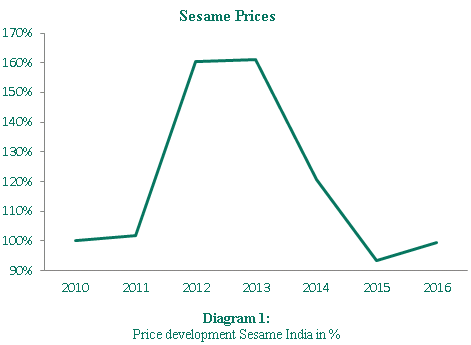
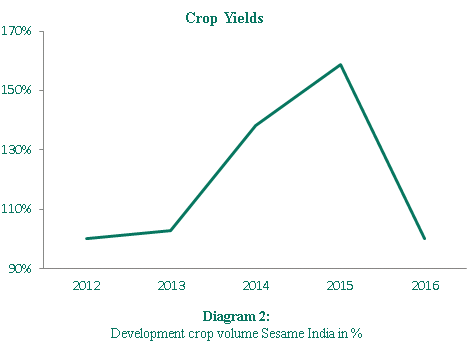
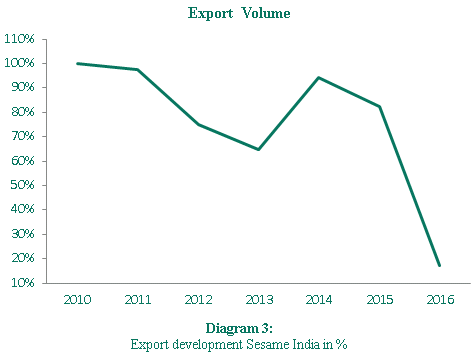
Early in 2016 sesame seed prices hit the 2011 all-time low again after 5 years (see diagram 1). The reason for the downward price trend was an increase in crop yields of sesame seeds up to 2015 (see diagram 2) while export quantities were declining (see diagram 3). There are indicators now which suggest that the price level of sesame seeds will be rising throughout the 2016/2017 crop period.


For the 2016 crop we expect the crop yield of sesame seeds in India to decrease by 50% on last season, partly as a consequence of a reduction in the planted acreage, which will account for a loss of about 30%. Some farmers have switched to more profitable crops.
The crop of sesame seeds has furthermore been damaged by heavy rainfalls. We expect this to lead to a further decrease of 20 %. In total this sums up to a slump of 50% compared to last year. There is a carry-over from the old crop of about 13 %. This means that the crop yield in India will reach the same level as in 2012 again and will therefore remain clearly below the previous years. As a consequence we expect an increase in quantities imported from Africa into the Indian domestic market. 


Sesame Seeds – Africa:

In Africa the crop of sesame seeds has so far been developing very positively. Nigeria will start harvesting in September and the yield is roughly equal to last year’s volume of ca. 220,000 mt.
Sudan and Ethiopia are also expecting a crop yield of between 200,000 and 250,000 mt of sesame seeds, which is similar to last year. Africa will be China’s main procurement market for sesame seeds. The planted acreage in Africa has been extended by about 250% over the last 10 years. The continent represents the largest growing region of sesame in the world.


Sesame Seeds – China:

Owing to strong rainfalls China is recording a substantial drop in its crop yield to ca. 300,000 mt of sesame seeds. Annual consumption amounts to about 1 million mt of sesame. We expect a clear increase of imported quantities during the 2016/2017 crop period.


Sesame Seeds – Conclusion:

Owing to the decrease in crop yields in India and China we are expecting those countries to import larger quantities of sesame seeds, with Africa as their main procurement market. This will finish the downward movement of prices. We believe that prices in India as well as in Africa will be rising and recommend purchasing to cover your demand of sesame seeds of the first half of 2017.

Market Update – Sunflower Seeds

Sunflower Seeds – New Crop 2016 – 24.08.2016

Sunflower Seeds – Bulgaria:

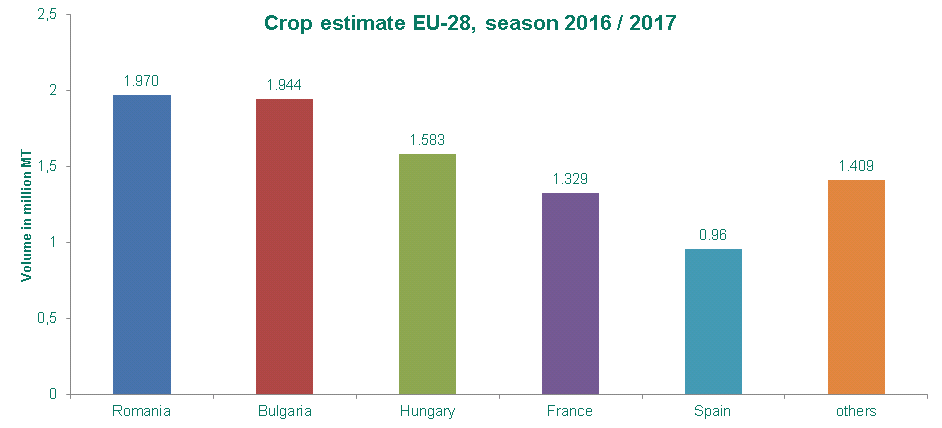
Compared to the previous season the sunflower seeds crop is estimated to increase by 360.000 MT to 1.94 million MT. The increase is due to a slightly increased yield of up to 2.4 MT per hectare and an expansion of 55,000 hectares to 810,000 ha in total.

Current summer dryness in Central and Eastern Europe could have an impact on the quality in terms of seed size or moisture according to market participants. Harvesting is expected to start slowly during the next 10 days.

There is a competition between the big oil crushers, traders and processors for raw materials because farmers are reluctant to sell in anticipation of better prices. First sales activities in order to assure raw materials have been noticed. The possible impacts of the continuously increasing production capacities of oil crushing mills in the Black Sea area should be noticeable.

The prices were on a historical level. The vegetable oil notifications are already increasing despite the positive forecast of the new crop. We recommend purchasing now for the mayor demand of your total volume.


Sunflower Seeds – Romania:

The sunflower seeds harvest is estimated to increase by 186,000 MT up to 1.97 million MT in comparison to the last season.

This increase will be owed to a substantial rise in the crop yield from 1.2 MT / hectare to 1.95 MT / hectare and an expansion of the acreage from 35,000 hectares to 1,010,000 hectares in total.

Harvesting is expected to start late in August -early in September, which is in average 10-14 days earlier than usual.


Sunflower Seeds – Russia:

The estimate of the Russian sunflower acreage has changed the most. The planted area for sunflower kernels increased by 547 thousand hectares up to 7,400 thousand hectares.
This area is below the record acreage of the 2011 / 2012 season with 7,614 thousand hectares. In the most positive case this change might lead to an estimated total yield of 11 million MT. New investments in growing crushing capacity were observed.


Sunflower  Seeds – Moldova:

Moldovan farmers have decreased the sunflower sowing area by 10 % for the new harvest of 2016 / 2017. This was caused by an essential increase in sowing material prices.

Despite the reduced sowing area farmers expect a higher harvest volume of up to 450,000 million MT in comparison with 350,000 million MT in the previous season due to the very good crop development this year.


Sunflower Seeds – Ukraine:

According to official announcements 5.9 million hectares were planted with sunflowers in the season 2016 / 2017.

The sunflower seed output is estimated to increase by 1.6 million MT up to 12.8 million MT compared to last season.

Ukraine has turned into the leading world market supplier of sunflower oil and is set to remain in this position for the coming seasons. Almost all sunflower seed produced in Ukraine is crushed domestically. Growing crushing capacities have been noted.


Sunflower Seeds –  EU-28:

The major producing countries of sunflower seeds in the EU have increased there planted area for the season 2016 / 2017 with cultivation in Spain, Hungary, Romania and Bulgaria. France will have to expect a decline in the planted area due to adverse weather conditions. This scenario leads to an increase of 1 % of the area in the EU as a total.

Sunflower seed yield is estimated to increase by 927,000 MT reaching up to 8.6 million MT in comparison to the last season. Still below the record crop in 2014 / 2015. Compared to the previous season the total acreage increased by 143,000 hectares to 4.3 million hectares.


sunflower seeds

All EU-28 states expect either flat or growing crushing volumes. The EU domestic demand for sunflower oil is expected to be very favorable, with consumption estimated at 3 percent higher and at the highest level for the last three seasons.

Spain, Germany, Hungary, United Kingdom, Romania and Portugal expect higher food usage of sunflower oil compared to 2015 / 2016.